January 2026 Update

We saw incredible growth at the end of 2025. We went from 10k to 30k users in a week and 43k in 2 weeks. More importantly of those 43k users people actually use the platform more. Especially during football games and other sporting events, the concurrent stream count has gone up to around 30k.

In November we used around $300 in bandwidth. In December we were on track to do the same until the sudden spike for the final patriots games on fox. We pay .05 cents per GB. In December we used 120TB.
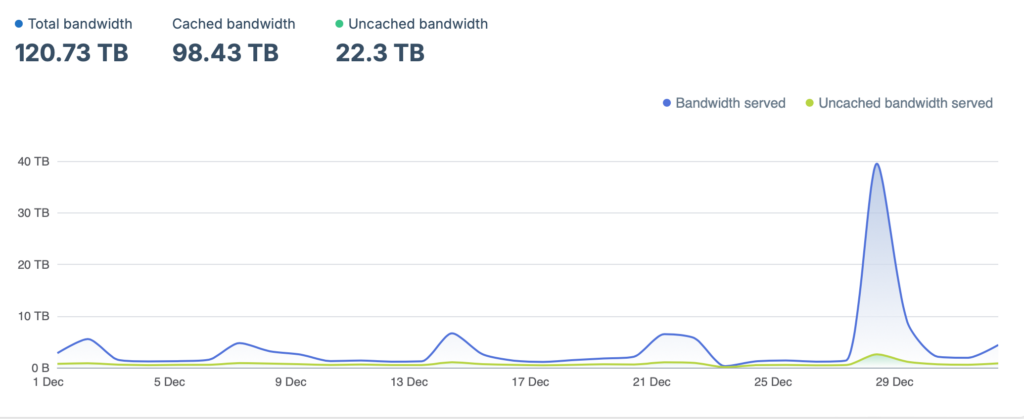
120.73 x 1024 GB×0.5 cents/GB=61,813.76  cents

Total Bandwidth Cost: $618.14

15 Days into January we have smashed those numbers already
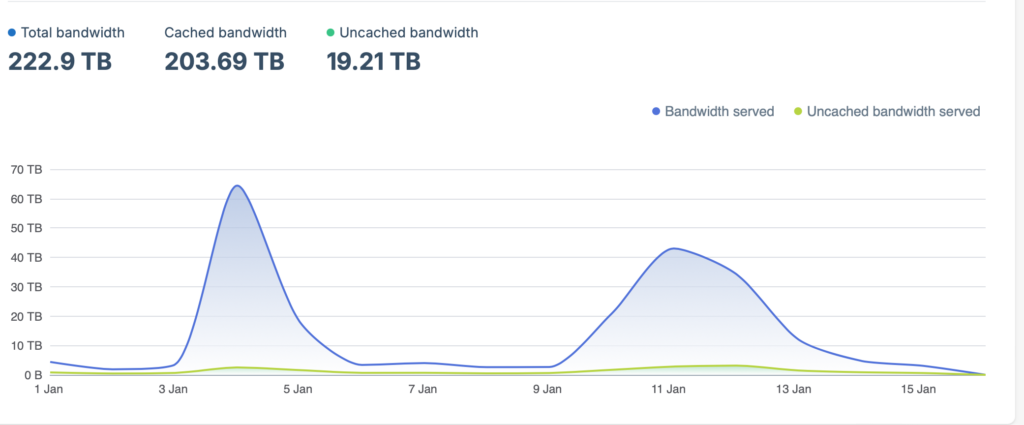
222.9 x 1024 GB×0.5 cents/GB=111,450 cents

Total Bandwidth Cost: $1,114.50

Assuming that there isn’t an even bigger spike at the end of the year, I expect the total bandwidth cost for January to be around $2,200.

This 222.9 TB number is interesting. On the localized spikes we have had close to 30k concurrent streams at once. Our streams are 3.5 Mbps when we hit those peaks:

30,000 streams×3.5 Mbps=105,000 Mbps

105,000 Mbps÷1,000=105 Gbps

105Gbps is faster than a lot of networking hardware. I’m impressed we managed to hit that.

With the current user base it will cost us a total of around 30k over the course of the next year. There are a few major sporting events I expect to see spikes, the Winter Olympics and the World Cup are both this year.
Viral growth

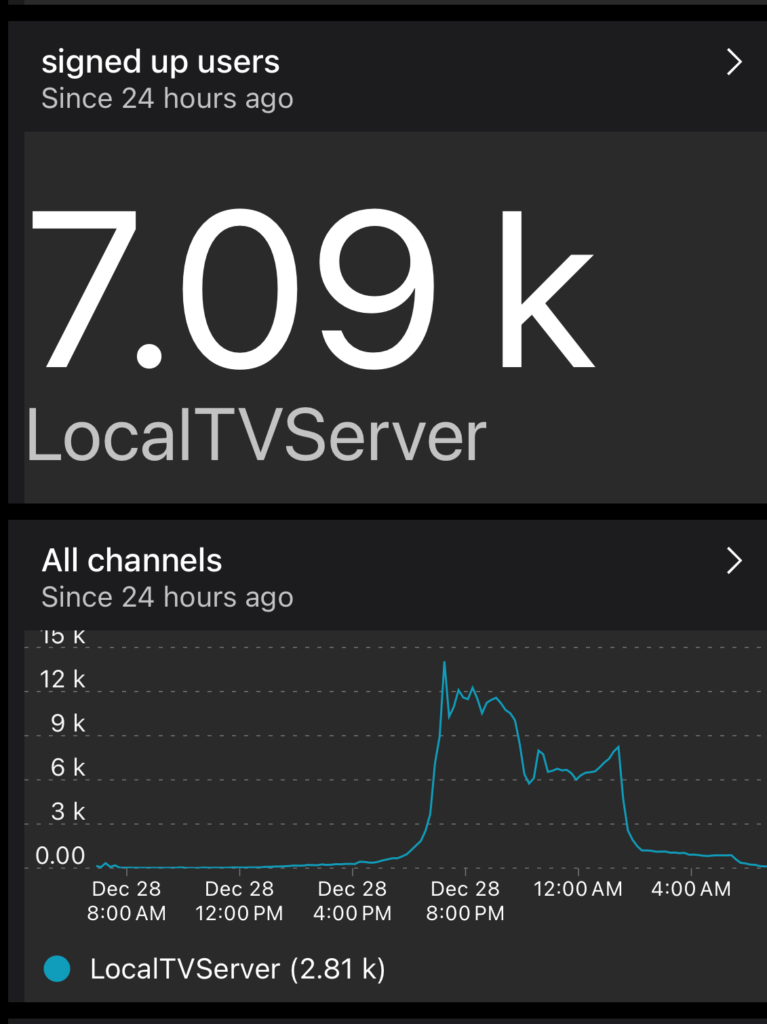
I was traveling in Europe the past couple of weeks. Early on in my travels we experienced a power related hardware failure on our oldest server. The old 2012 Dell desktop that powers most of the service. Thankfully, it was resolved quickly and we have a replacement ready to go for the new year. We had a very brief moment of downtime and I was looking forward to an uneventful end of the year. Unbeknownst to me, the Verizon – Cox dispute was ongoing and it interfered with the ability of people to watch Patriots games on Fox in Boston. Around Dec 27th we were covered in Boston.com . This appears to be the origin of the viral growth. In the 24 hours since this was posted, around 7k people signed up for the service and watched the Patriots game on Fox. In total there were just around 15k users streaming the game on game day.

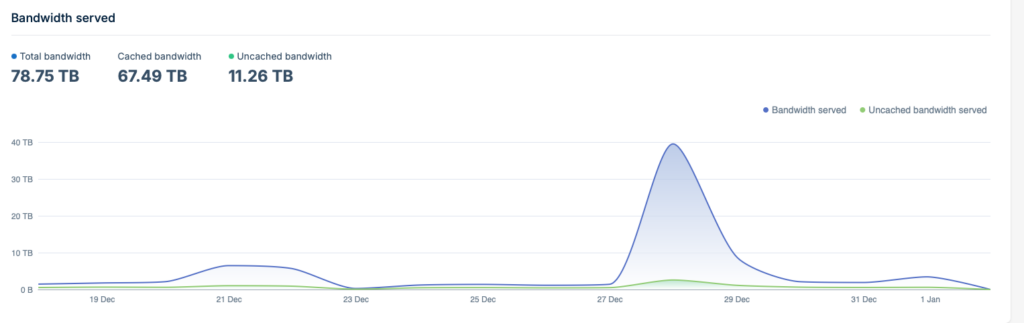
All of the viewers used 40 Tb on data in a night.

New users used to register at the rate of 10-15 a day. We now see about 500 users sign up every day. As of Jan 2, we are at :

24408 users

30,404 devices

Prior to Dec 27 we had a total of 10k users signed up over the previous 2 years. More users signed up in the first 48 hours than the previous two years combined. Prior to this, our busiest day was the Patriots opener at 800 concurrent streams. On December 28th we successfully scaled up to 15k concurrent streams with no increased load on our servers (see green line above).

Thanksgiving 2025: Looking back at 2 years of LocalTV+

I like to post updates on Thanksgiving since the disastrous one 2023 was the first time this app was more widely used and we learned so much. Thanksgiving 2024 was much better and it showed how well the app can now scale and adjust to higher traffic levels. In 2025 we have had a much more stable service, iOS and AppleTV versions launched in the app store in January and we have clients on Android devices too. There are now around 11k users using the app and it is able to comfortably handle above 800 concurrent viewers. We’ve upgraded our video hardware to nvidia encoders that are much better. In 2026 we’ll switch to the more modern h265 standard for better video and lower operating costs. We are currently building our new servers that will be located in different locations for higher availability. A general focus for 2026 will be maintaining a more reliable service

Cheap Android Tv Hardware

Last year I wrote a cheap Apple hardware guide for people who wanted to use this service while it was only on iOS and AppleTV. On AndroidTV I have been using the Onn streaming devices as reference hardware to test with. These devices are generally well reviewed and got for $14 for a stick and $19 for the box. This is probably the least expensive way to use this service. I regularly test with the box and have heard from others that the stick, which is hardware wise similar works fine as well.

November update

We have made a lot of progress toward our goals for the year. The Android client is stable and undergoing polish and testing. We are making a lot of progress on Android tv. A hardware donation of an onn streaming box has allowed increased testing on that platform. We’ve had several betas in the past week each improving pain points in the ui observed while “dog footing” the service on Android tv. The goal is to reach feature parity on all platforms.

We have added subtitles to nearly every channel now. We’ve received several new servers and nvidia encoders. The new encoders have allowed us to increase the quality of the channels without increasing file size. A major goal going forward is to move from h264 to h265. In theory this should reduce our file sizes by about 50% (and as a result reduce the cost of bandwidth) while maintaining the same quality. We are very close to 10k users so reducing bandwidth costs will be key to maintaining sustainable project.

The new servers should also let us add more nodes to our kubernetes cluster as well as better remote management. The most tangible benefit of this will be improved reliability.

Data Usage, Device counts and other fun metrics

The combination of the iOS and tvOS App Store releases the Android and Android TV public betas has resulted in a large increase in our user base. After the summer lull, the return of football means a lot more people are watching live TV on the broadcast networks. It is time for a usage breakdown:

Total users: 7496

Devices:

  • iOS: 7521
  • AppleTV: 2089
  • Android: 307
  • Android Tv: 103

Usage:

We see the most viewers during football. This is our concurrent viewer count for Sunday Sept 7th which was main NFL opening day. These are all time high concurrent user numbers for us. Overall the platform scaled up without any issues.

So how much data did we use? At the time where we had 800 viewers, the green line, which is a proxy for the load on our servers is flat and the blue line is the CDN absorbing the spike properly and sending out an additional 5.18TB of data.

Monthly Costs

Our hosting and energy costs are largely fixed at $70. The primary variable cost is the CDN aka blue line in the chart above.

Previous months:

May: $92

June: $88

July : $41 (we were down repeatedly)

August: $77

15 days in Sept: $125

At the moment, Sept averages to $8 /day.

Currently, I estimate the monthly operating costs to be $250 + $70 = $320. This translates to $10/day or $0.00125 per user per day.

Remainder of 2025 roadmap

This is the general roadmap for the project as we enter the fall.

  1. Android client: we are trying to work out with Google the Android and Android tv public beta. The current block is explaining how our location access is used. The goal here is to have public clients anyone can install even if it isn’t a play store release before the NFL season and the MLB post season.
  2. Hardware upgrades: there are several hardware upgrades we are planning. We recently received a super micro server from Boston university along with a couple of UPS. The additional computational power a will help us add more channels and all the additional Android users who will sign up. We are planning on adding some more NVidia graphics cards to our servers to allow additional channels to be encoded. The UPS will help us maintain reliable service Esp with the kind of power disruption we saw in early July.
  3. Closed captions: with the new encoder hardware and computational power we are planning on adding closed captions to our channels. The hope is to have this enabled by default everywhere.

How we made the Android apps

LocalTV+ now has apps for Android and AndroidTV. We are close to feature parity with iOS. We hope to release it to a wider beta after the internal beta testers have used it for a little bit longer and ironed out the most glaring issues. Three days ago there was no Android app. I am not an Android developer and we also have not brought onboard any Android developers. So what happened? We used AI. In particular we are using Cursor. We started with screenshots from the iOS app. That is how the UI in the video from the other day was generated. Over the last couple of days I have given cursor further prompts on what the UI should look like and what the buttons should do. After about 4 hours total of prompts and code review, we had a functional Android application. The TV app was another cursor prompt that said ‘based on the android application generate an android tv application’. If you are wondering what can be produced when you effectively pair program an AI agent with a human developer, it’s this. This was likely weeks of work condensed into a few hours.

Android Update

Thought I would share an update on the status of the Android app. It is still very rough around the corners and there are still a few security and technical issues that need to be resolved before a beta period begins. However the current alpha is functional.