Optimizing FFMPEG to reduce costs

As you are likely aware we grew in single a week from a few hundred streams to 30k concurrent streams. While the platform can scale to 30k (or higher!), our primary expense is the cost of bandwidth. We took the time late last week to install some new hardware. The notable component here are (newish) NVIDIA encoders. The newer encoder is a Turing based encoder and we are trying to take advantage of optimizations in the encoder to reduce our cost to serve. At the moment we are switching to using B-frames on most of our encoders. This should in theory reduce our cost to serve these files on the HD channels by up to 30% by making the files that much smaller. In theory this should not come with a reduction in quality but let me know if you notice it. Similarly when applied to the 480i channels (the sub channels) the improvement is far more dramatic, with an 70-80% reduction in file size. While fewer people watch sub channels compared to the HD ones but since the upgrade we have been able to add close to a dozen sub channels, which should give you more content options.

Beyond cost the smaller files of more predictable size should also result in smoother playback overall.
January 2026 Update

We saw incredible growth at the end of 2025. We went from 10k to 30k users in a week and 43k in 2 weeks. More importantly of those 43k users people actually use the platform more. Especially during football games and other sporting events, the concurrent stream count has gone up to around 30k.

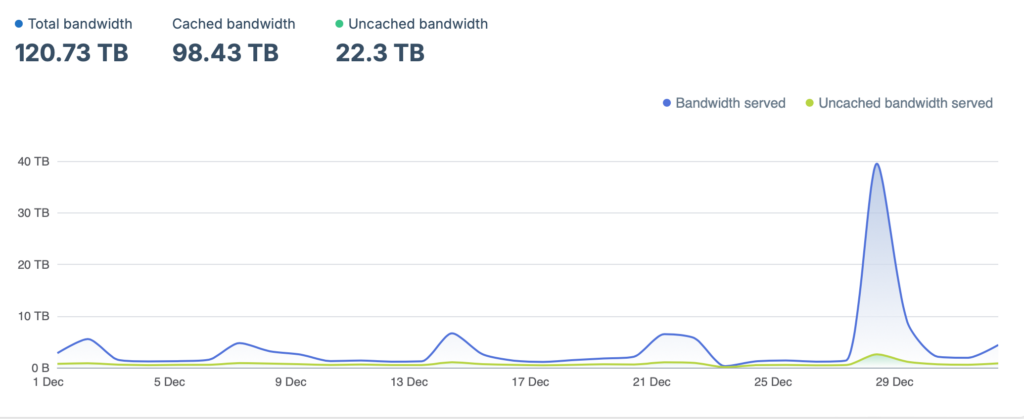
In November we used around $300 in bandwidth. In December we were on track to do the same until the sudden spike for the final patriots games on fox. We pay .05 cents per GB. In December we used 120TB.

120.73 x 1024 GB×0.5 cents/GB=61,813.76  cents

Total Bandwidth Cost: $618.14

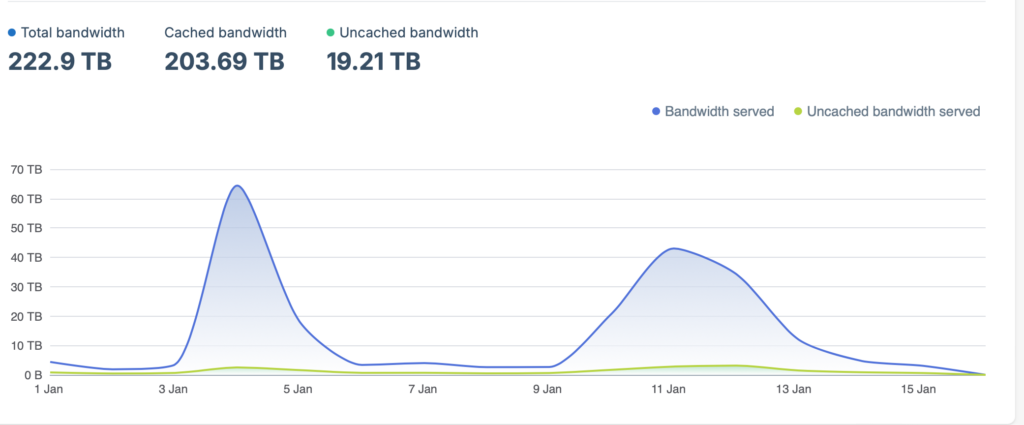
15 Days into January we have smashed those numbers already

222.9 x 1024 GB×0.5 cents/GB=111,450 cents

Total Bandwidth Cost: $1,114.50

Assuming that there isn’t an even bigger spike at the end of the year, I expect the total bandwidth cost for January to be around $2,200.

This 222.9 TB number is interesting. On the localized spikes we have had close to 30k concurrent streams at once. Our streams are 3.5 Mbps when we hit those peaks:

30,000 streams×3.5 Mbps=105,000 Mbps

105,000 Mbps÷1,000=105 Gbps

105Gbps is faster than a lot of networking hardware. I’m impressed we managed to hit that.

With the current user base it will cost us a total of around 30k over the course of the next year. There are a few major sporting events I expect to see spikes, the Winter Olympics and the World Cup are both this year.

Viral growth

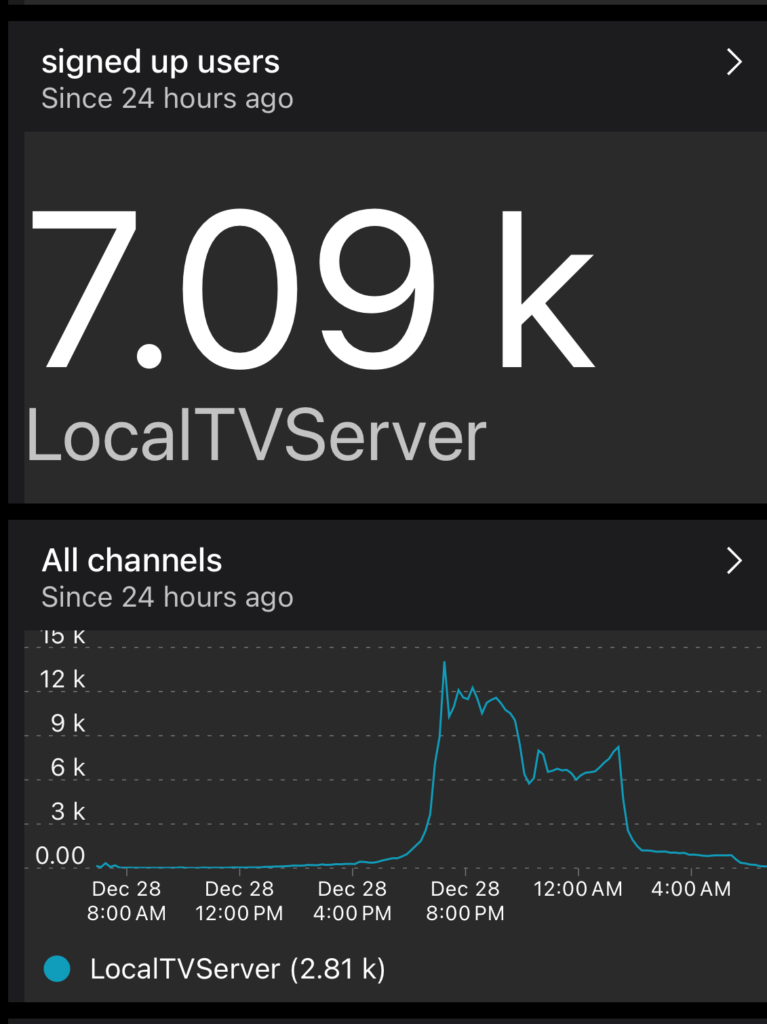
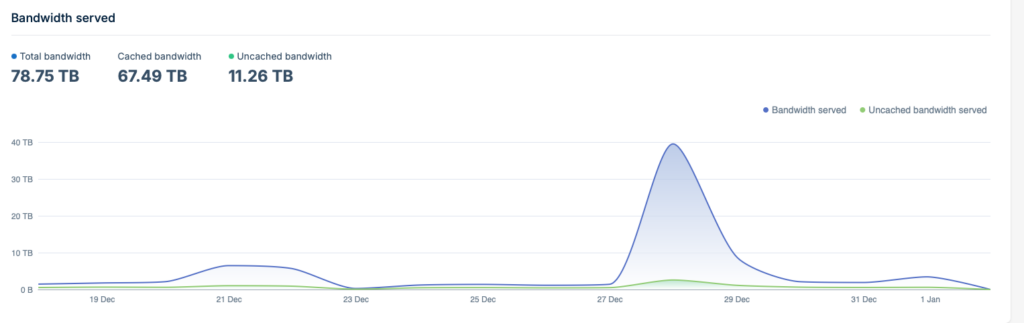
I was traveling in Europe the past couple of weeks. Early on in my travels we experienced a power related hardware failure on our oldest server. The old 2012 Dell desktop that powers most of the service. Thankfully, it was resolved quickly and we have a replacement ready to go for the new year. We had a very brief moment of downtime and I was looking forward to an uneventful end of the year. Unbeknownst to me, the Verizon – Cox dispute was ongoing and it interfered with the ability of people to watch Patriots games on Fox in Boston. Around Dec 27th we were covered in Boston.com . This appears to be the origin of the viral growth. In the 24 hours since this was posted, around 7k people signed up for the service and watched the Patriots game on Fox. In total there were just around 15k users streaming the game on game day.

All of the viewers used 40 Tb on data in a night.

New users used to register at the rate of 10-15 a day. We now see about 500 users sign up every day. As of Jan 2, we are at :

24408 users

30,404 devices

Prior to Dec 27 we had a total of 10k users signed up over the previous 2 years. More users signed up in the first 48 hours than the previous two years combined. Prior to this, our busiest day was the Patriots opener at 800 concurrent streams. On December 28th we successfully scaled up to 15k concurrent streams with no increased load on our servers (see green line above).